Top 10 Heat Pump Filter Drier Suppliers Worldwide?
Choosing a reliable Heat Pump Filter Drier supplier affects efficiency, compressor protection, and long-term system stability. This small component removes moisture, acid, and solid particles from the refrigerant circuit. Its influence is far greater than its size suggests. A blocked core can raise pressure drop, reduce heating capacity, and increase compressor stress.
Refrigeration author John Tomczyk has said, “The filter-drier is one of the most important components in a refrigeration system.” That observation remains practical in modern heat pump servicing. Today’s equipment may use R32, R410A, R290, or other refrigerants. Each application demands careful attention to materials, pressure ratings, flow direction, and oil compatibility. A suitable product must also match the system’s capacity and expected operating temperature.
This guide examines ten Heat Pump Filter Drier suppliers with international reach. The comparison considers manufacturing experience, product range, quality controls, technical documentation, and after-sales support. It also considers practical details, such as core replacement, shell construction, brazing connections, and moisture-indicator options. Certifications matter, but they do not tell the whole story. Field performance matters too.
Some supplier data is difficult to compare fairly. Public specifications may use different test conditions. That weakness deserves attention. Buyers should request pressure-drop charts, refrigerant compatibility statements, batch traceability, and application guidance before ordering. A low purchase price can become expensive when contamination returns or service intervals shorten. The strongest suppliers combine consistent production with responsive engineering support. This list offers a useful starting point, not an unquestionable verdict.
What Is a Heat Pump Filter Drier and Why Is It Important?
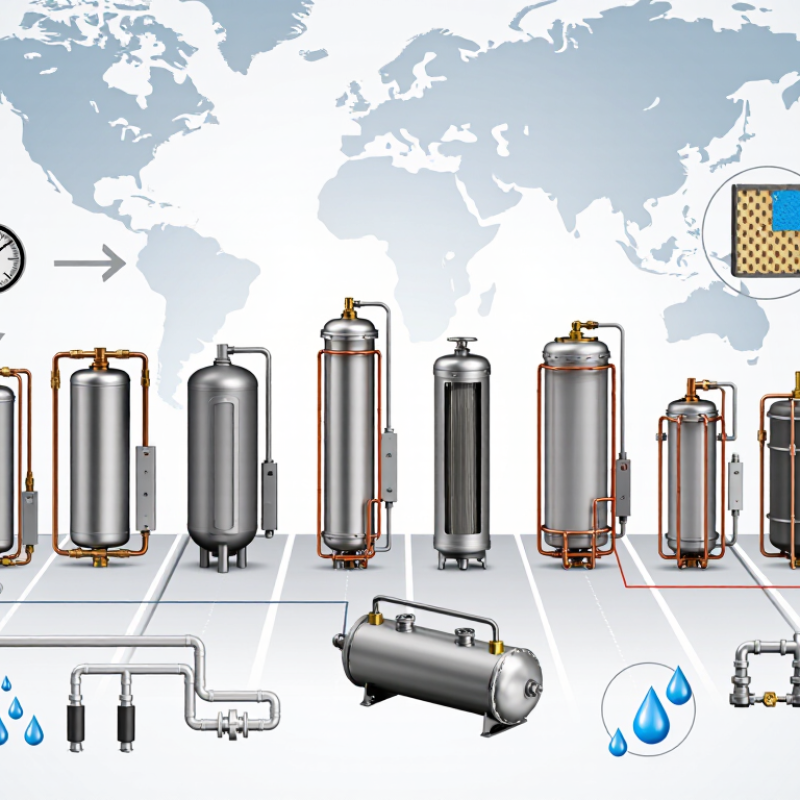
A heat pump filter drier is a compact refrigeration component installed in the liquid line. It captures moisture, acids, and solid particles before they reach sensitive parts. Moisture can freeze near the expansion device. It can also react with oil and refrigerant, creating corrosive compounds. The result may be poor heating output, unstable pressures, or compressor damage. Small component. Serious protection.
The International Energy Agency reported that global heat pump sales grew by about 11% in 2022. Its analysis also identified heat pumps as an important tool for reducing fossil fuel use in buildings. However, efficiency depends on clean, dry circuits. A filter drier cannot correct poor evacuation or incorrect charging. It only helps when technicians install and size it correctly. The U.S. Department of Energy states that heat pumps can use around 50% less electricity than resistance heating. Contamination can reduce that advantage.
When comparing the top ten supplier options worldwide, buyers should check filtration capacity, moisture capacity, pressure rating, refrigerant compatibility, and documented quality testing. Look for products aligned with recognized refrigeration and safety standards. Field service reports often reveal more than catalogue claims. A drier that looks identical may perform differently under low temperatures or repeated cycling. One practical weakness remains: replacement intervals are not universal. System history, burnout events, moisture exposure, and commissioning quality must guide the decision. As the IEA notes, rapid heat pump growth increases the need for reliable installation practices, not merely more equipment.
How to Evaluate Global Heat Pump Filter Drier Suppliers
Evaluating global heat pump filter drier suppliers requires more than comparing unit prices.
The International Energy Agency reported that global heat pump sales grew by about 11% in 2022, while European sales rose nearly 40%. This expansion increases demand for reliable moisture and contaminant control. However, rapid market growth can hide uneven supplier capabilities.
Request documented capacity data for moisture removal, acid adsorption, pressure drop, and maximum working pressure. Confirm that test methods follow recognized requirements, such as AHRI Standard 711 for liquid-line filter-driers. A dependable supplier should provide batch traceability, material specifications, shelf-life details, and installation guidance. Ask for samples from different production lots. One sample proves little.
Check factory quality systems, audit access, and complaint-response times. ISO 9001 certification helps, but it is not a complete performance guarantee. Verify compatibility with the refrigerants, oils, temperatures, and connection sizes used in your heat pump design. UNEP’s 2022 assessment highlights the industry’s continuing transition toward lower-impact refrigerants, so compatibility evidence matters.
A supplier with regional warehouses may reduce delays, yet storage conditions still deserve inspection. I would not trust impressive brochures alone. Test results can be incomplete, and even experienced buyers sometimes overlook pressure-drop changes after contamination loading. The strongest evaluation combines laboratory evidence, field references, transparent communication, and a small pilot order.
Top 10 Heat Pump Filter Drier Suppliers Worldwide
Top 10 Heat Pump Filter Drier Suppliers Worldwide
Choosing among the top 10 heat pump filter drier suppliers worldwide requires more than comparing prices. A reliable supplier should provide stable desiccant performance, accurate flow data, and clear pressure ratings. In field installations, moisture often enters through poor evacuation or repeated service work. A properly selected filter drier helps capture moisture, acids, and fine particles before they damage the compressor. Check compatibility with the refrigerant, connection size, operating temperature, and maximum working pressure. Technical documents should include batch traceability and test results. These details show practical quality, not just marketing claims.
Tips:
Ask suppliers for installation guidance, storage instructions, and replacement recommendations. Confirm whether their products suit modern low-global-warming-potential refrigerants. Inspect packaging for dents, broken seals, or moisture exposure. Small details matter. Keep records of model numbers and installation dates. This supports maintenance decisions later.
The strongest global suppliers usually combine manufacturing control with responsive technical support. Regional warehouses can reduce project delays, especially during winter repairs. However, a long supplier list does not guarantee equal performance. Independent testing and installer feedback remain valuable. I would also question unusually low prices, because thinner shells or inconsistent desiccant loading may create hidden risks. My judgment may change as refrigerants, regulations, and heat pump designs evolve. That is why procurement teams should review specifications annually, rather than trusting an old ranking.
Key Products, Technologies, and Market Strengths of Each Supplier
The top ten heat pump filter drier suppliers compete through product design, testing depth, and regional service.
The first supplier focuses on compact copper-shell driers for residential units.
The second offers high-capacity cores for commercial heat pumps.
The third is strong in replaceable-core assemblies.
The fourth develops models for low-temperature refrigerants.
The fifth emphasizes moisture indicators and visual inspection.
The sixth supports custom connection sizes for equipment manufacturers.
The seventh supplier is known for tight pressure-drop control.
The eighth provides vibration-resistant designs for transportable systems.
The ninth serves harsh coastal markets with improved corrosion protection.
The tenth combines standard driers with service valves and installation kits.
Their technologies commonly include molecular-sieve desiccants, fine filtration media, and brazed or welded housings. Reliable suppliers also publish flow data, temperature limits, refrigerant compatibility, and burst-pressure results. These details matter more than attractive catalog language.
In field work, technicians should match the drier to refrigerant type, system charge, compressor capacity, and expected moisture load.
A small residential drier may restrict flow in a larger commercial circuit. That mistake is easy to miss.
Suppliers with local warehouses reduce downtime, while engineering teams help solve unusual piping layouts.
Independent laboratory testing strengthens confidence, but certificates alone do not prove long-term performance.
Installation records, returned-part analysis, and practical warranty support reveal more.
I would still question any supplier promising universal compatibility. Heat pump systems vary too widely for that claim.
How to Select the Right Supplier for Your Heat Pump System
Top 10 Heat Pump Filter Drier Suppliers Worldwide?
How to Select the Right Supplier for Your Heat Pump System
Choosing among leading filter drier suppliers requires more than comparing prices. A suitable supplier should understand heat pump operating conditions, refrigerant behavior, and installation limits. Ask for documented compatibility with your refrigerant, pressure range, temperature range, and connection type. A drier designed for a small residential unit may fail in a commercial system with long pipe runs.
Check the product’s moisture capacity, filtration performance, pressure drop, and internal construction. Reliable suppliers provide batch traceability, technical data sheets, and consistent factory testing. Their service teams should answer practical questions, such as correct installation direction and replacement timing. This matters during winter service calls.
Field experience often exposes hidden differences. A low-cost drier can create higher resistance or premature blockage. That risk is easy to miss.
Review delivery records, inventory locations, warranty terms, and technical support before signing a supply agreement. Global suppliers may offer broad coverage, but shipping delays can interrupt maintenance. Regional stock is sometimes more valuable than a slightly lower unit price. I have also learned that impressive specifications do not always guarantee stable production quality. Request samples, inspect packaging, and compare test documents with actual measurements. Supplier selection should reflect your system’s refrigerant, capacity, climate, and service habits. Generic purchasing decisions can become expensive.