How to Choose the Best Mini Fridge Compressor for Your Needs?
Choosing the right mini fridge compressor is crucial for your needs. This decision impacts efficiency, cooling performance, and longevity. Mini fridge compressors come in various types, each with unique features. Understanding these differences can be overwhelming.
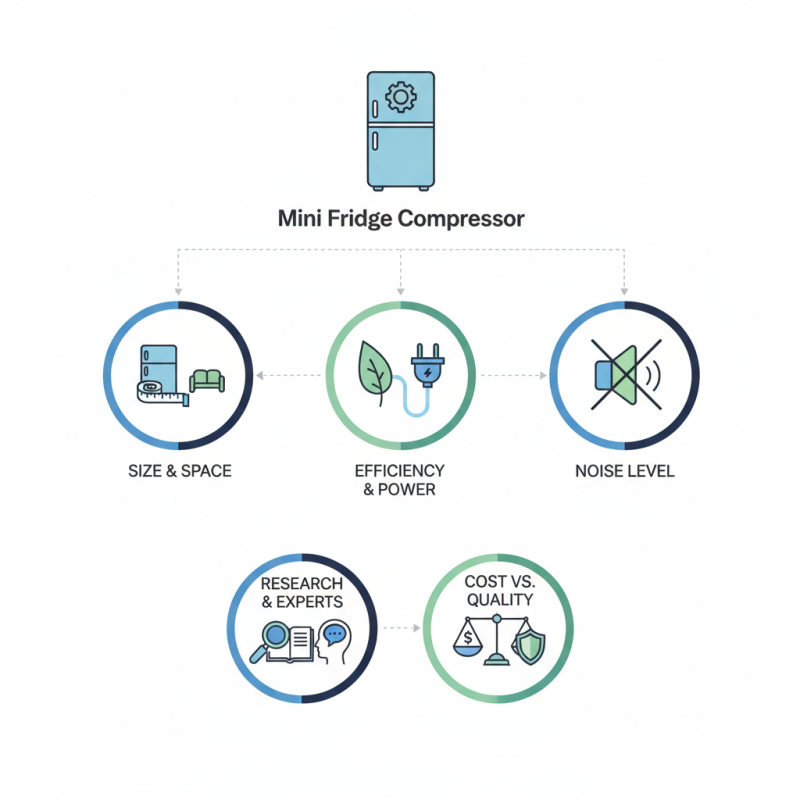
Consider the size and space where you plan to place your mini fridge. A compact area may require a specific compressor model. Look for energy-efficient options that consume less power. This trait contributes to lower utility bills over time. Noise level is another key factor. A noisy compressor can disrupt your daily life.
Research is essential when selecting a mini fridge compressor. Reliable sources and reviews guide your options. Don’t be afraid to reach out to experts for advice. Even small details matter. Reflecting on your priorities can lead to the best choice. Balancing cost with quality is often tricky.
Understanding the Basics of Mini Fridge Compressors
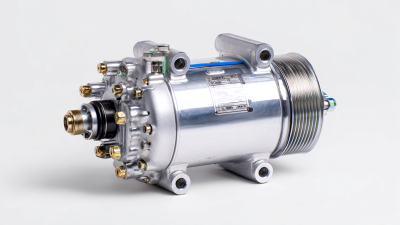
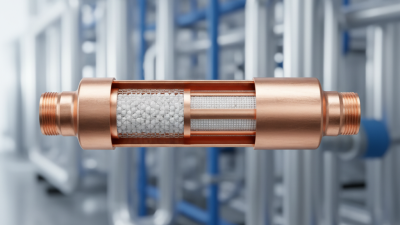
When selecting a mini fridge compressor, it's essential to understand its function and design. A compressor is crucial for maintaining the temperature inside your fridge. It compresses refrigerant gas, turning it into a liquid. This process enables efficient cooling. The design influences efficiency and noise levels. A well-designed compressor operates quietly, ensuring a peaceful environment.
Mini fridge compressors come in two types: reciprocating and rotary. Reciprocating compressors use pistons to compress refrigerant, while rotary compressors employ a rotating mechanism. Reciprocating compressors are generally more common. They are effective but can be noisier. On the other hand, rotary compressors are quieter and more compact. However, they may not be suitable for all models or settings.
Experience reveals different needs based on usage. For instance, if you need a fridge for dorm rooms or studios, a smaller, quieter compressor can be beneficial. For more frequent use, a robust compressor ensures longevity. Assess your space and requirements before choosing. It’s important to reflect on what suits your lifestyle best. Understanding these components enhances your ability to pick wisely.
Factors to Consider When Choosing a Mini Fridge Compressor
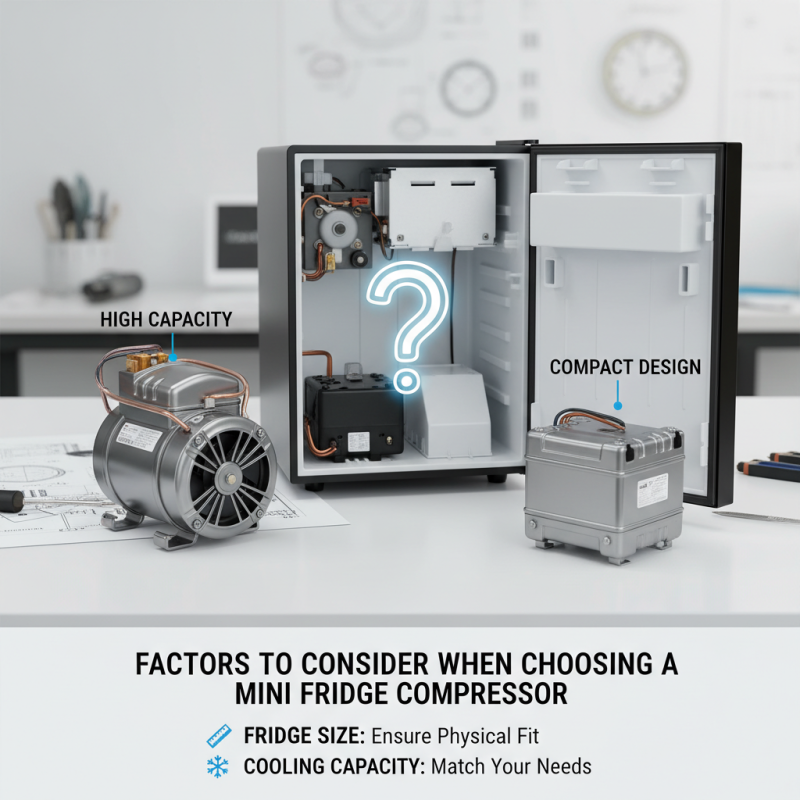
Selecting the right mini fridge compressor is crucial for optimal performance. Several factors influence your choice. First, consider the size of the fridge. A larger compressor may not fit in a compact space. Also, evaluate the cooling capacity. You need a compressor that meets your cooling requirements without overworking itself, which can lead to higher energy costs.
Energy efficiency is another critical factor. Look for models with good ratings. These will save you money in the long run. Noise levels matter, too. A loud compressor can be disruptive, especially in small areas. Check reviews to find models known for quiet operation.
Lastly, assess the durability and warranty options. A reliable compressor should last long. Sometimes warranties highlight the manufacturer’s confidence in their product. Reflect on your decorating style as well. A compressor that suits your aesthetic can enhance your overall space. Each factor needs consideration to find the best fit for your needs.
Comparing Different Types of Mini Fridge Compressors
When it comes to mini fridge compressors, understanding the different types can greatly influence your purchase. There are typically two main categories: reciprocating and thermoelectric compressors. Reciprocating compressors, which are more common, are known for their efficiency and cooling power. According to a report by the Appliance Research Institute, they can operate effectively in temperatures up to 100°F, making them suitable for various environments.
On the other hand, thermoelectric compressors provide a quieter, vibration-free option. Although they generally consume less energy, their cooling capabilities may not match those of their reciprocating counterparts. This makes them ideal for light-duty use or small spaces. Data indicates that thermoelectric units have a higher failure rate in warmer conditions, which is something to consider.
Tip: Assess your environment. If you plan to use your mini fridge in a hotter location, a reciprocating compressor is a more reliable choice.
Another aspect to reflect on is energy consumption. The best models balance performance and efficiency. Research shows that units with higher Energy Star ratings can save owners up to $100 annually on energy costs. However, these models often come at a higher upfront price, which might not suit every budget.
Tip: Look for long-term savings over initial costs. Consider how frequently you'll use the fridge, as this may affect your decision.
How to Choose the Best Mini Fridge Compressor for Your Needs? - Comparing Different Types of Mini Fridge Compressors
| Type of Compressor |
Cooling Efficiency (BTU/h) |
Power Consumption (W) |
Noise Level (dB) |
Typical Use |
| Reciprocal Compressor |
100-150 |
70-90 |
40-50 |
Home and Office |
| Thermoelectric Cooler |
50-100 |
30-60 |
25-30 |
Personal Use/Small Spaces |
| Variable Speed Compressor |
120-200 |
50-80 |
35-45 |
Bars and Restaurants |
| Scroll Compressor |
150-250 |
60-110 |
40-55 |
Commercial Use |
Assessing Energy Efficiency and Noise Levels in Compressors
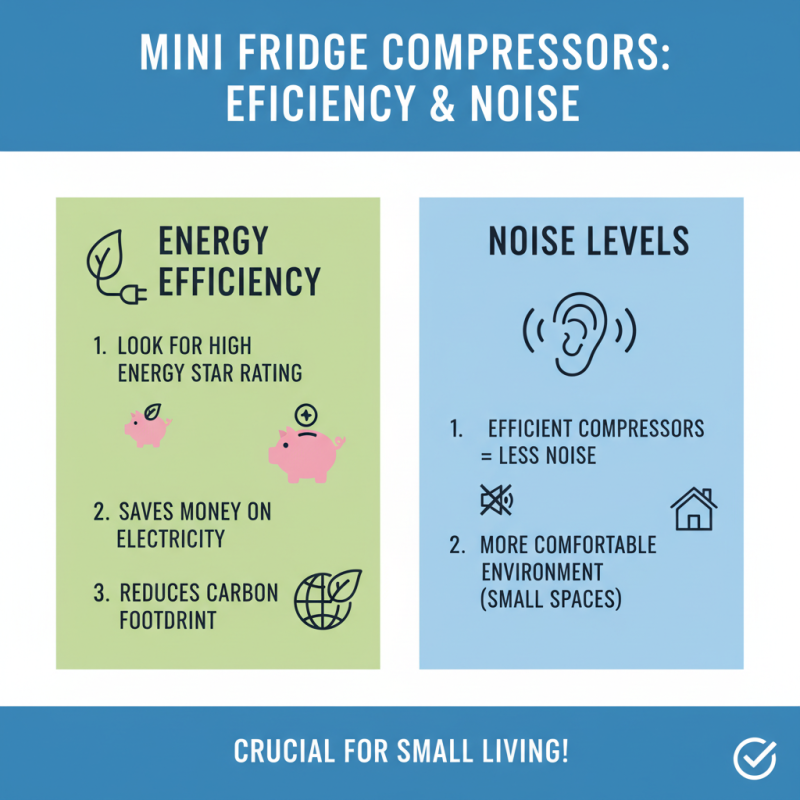
When choosing a mini fridge compressor, energy efficiency is crucial. Look for models with high Energy Star ratings. A more efficient compressor saves money on electricity bills. It also reduces your carbon footprint. In small living spaces, this efficiency becomes even more important. It minimizes unnecessary noise while running, creating a more comfortable environment.
Noise levels in compressors vary significantly. Some models operate quietly under 40 decibels, while others can be much louder. A noisy fridge can disrupt your daily life. Consider your space before purchasing. If it’s near a bedroom or living area, opt for quieter options. Read user reviews to gather insights on noise complaints. This feedback can reveal hidden issues. Emphasizing energy efficiency and noise levels leads to a more satisfying choice, impacting your overall experience.
Maintenance Tips for Prolonging the Life of Your Mini Fridge Compressor
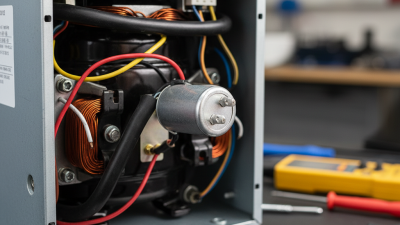
When it comes to maintaining your mini fridge compressor, regular care is essential. Dust and debris can build up and block airflow. This can lead to overheating and inefficiency. Use a soft cloth to wipe the exterior and ensure vents are clean. Checking the compressor unit regularly is crucial. Listen for unusual sounds, which could indicate a problem.
Another important tip is to keep the fridge well stocked. An empty fridge might cause the compressor to cycle on and off too frequently. This can strain the compressor over time. Also, avoid overloading the fridge, as that can restrict airflow and lead to cooling issues. Regularly monitor the temperature settings and adjust as needed.
Lastly, consider placing the mini fridge in a well-ventilated area away from heat sources. This helps the compressor work efficiently. It’s easy to overlook these simple steps, but they significantly affect the longevity of your mini fridge compressor. A little attention goes a long way in ensuring your appliance runs smoothly for years.